RF Data Hub
DIY Raspberry Pi RF and Environmental Data Logger
PROJECTS
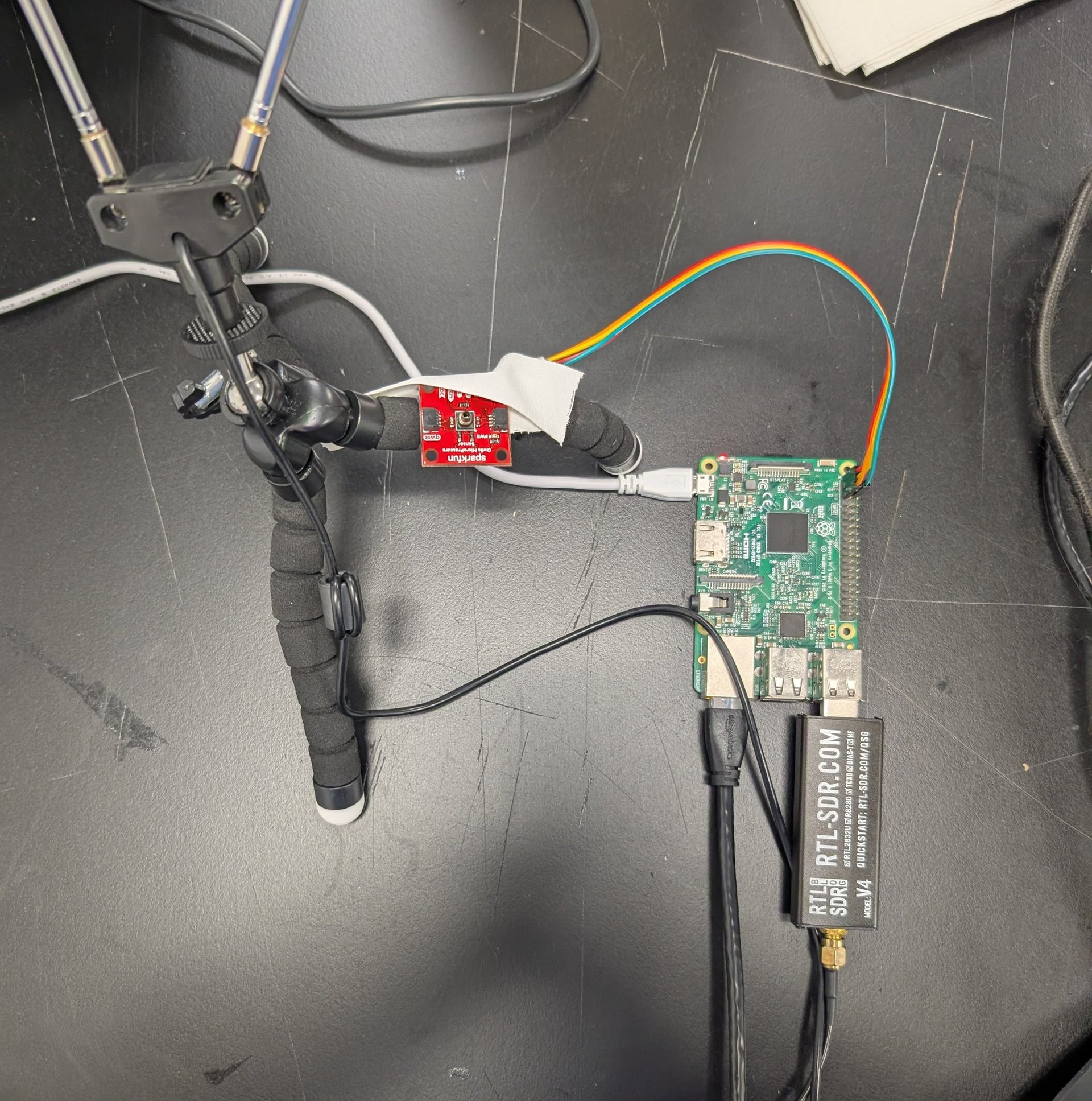
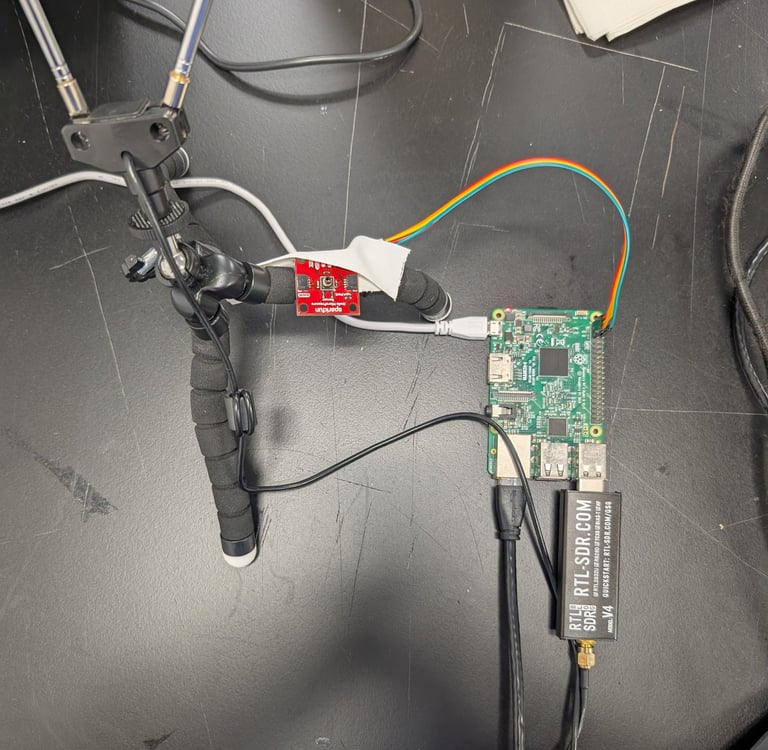
RF Data Hub is a Raspberry Pi-based measurement platform I built to collect local radio-frequency data and pair it with environmental context. The system uses an RTL-SDR receiver to monitor RF power across user-defined frequencies, while also logging sensor and weather data such as pressure, temperature, system health, and public weather station information.
I designed the project around a configurable YAML file so users can choose between single-frequency monitoring and multi-frequency sweep mode. In monitor mode, the system tracks one frequency for a set duration and interval. In sweep mode, it scans through a user-defined list of frequencies and logs each result. The data is saved in a clean long-format CSV structure, making it easy to analyze, plot, and expand with additional sensors.
The project also includes a local FastAPI web dashboard that can be accessed from another computer on the network. The dashboard displays recent readings, provides a JSON API endpoint, and allows CSV data export.
This project was motivated by the lack of easily accessible, local RF datasets. RF behavior depends heavily on location, time, weather, antenna setup, and surrounding interference, so I wanted to build a system that could collect structured RF observations over time. The result is a low-cost RF data hub that can be extended into a larger open-source RF observatory.
Key features:
Raspberry Pi-based data collection
RTL-SDR frequency monitoring and sweeping
Configurable YAML setup
SparkFun pressure sensor integration
Open-Meteo weather API logging
Pi system telemetry logging
Clean CSV export
FastAPI local dashboard
JSON API for latest readings
Modular sensor design for future expansion
Tools used: Raspberry Pi, RTL-SDR, Python, FastAPI, Uvicorn, PyYAML, Open-Meteo API, SparkFun Qwiic MicroPressure sensor, Linux, I2C, CSV data logging.
What I learned: This project strengthened my understanding of RF measurement workflows, Linux-based hardware development, I2C sensor integration, data logging architecture, and building useful dashboards around physical measurements. It also helped me think more carefully about how to structure engineering data so it can be reused, analyzed, and shared.